
Websites
May 19, 2026
What makes a Loam website different?
Loam built ten example websites for fictional businesses. Here is how those sites compare with Wix, Squarespace, WordPress, Webflow, AI-built and custom-coded sites.
Read moreCustom website examples
Ten businesses that do not exist, on ten websites that do. Each was designed and built from scratch for its industry, with its own brand, layout and features, not a template with the name swapped. See the real thing, in light and dark mode, without seeing anyone's private business.
Ten custom sites
Choose an industry to see the site we built for it. Drag the slider to see it in light and dark mode, then visit the real thing.
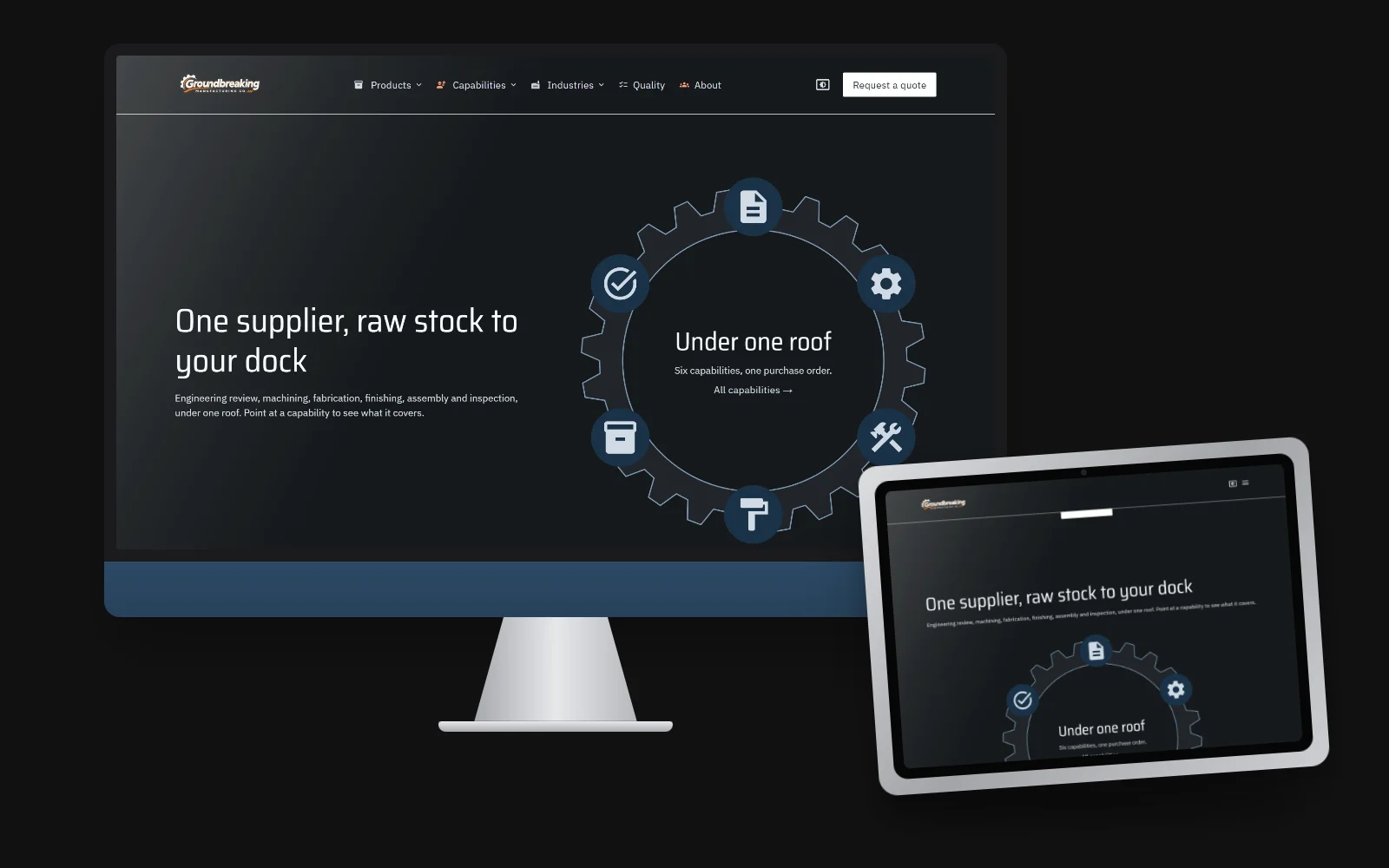
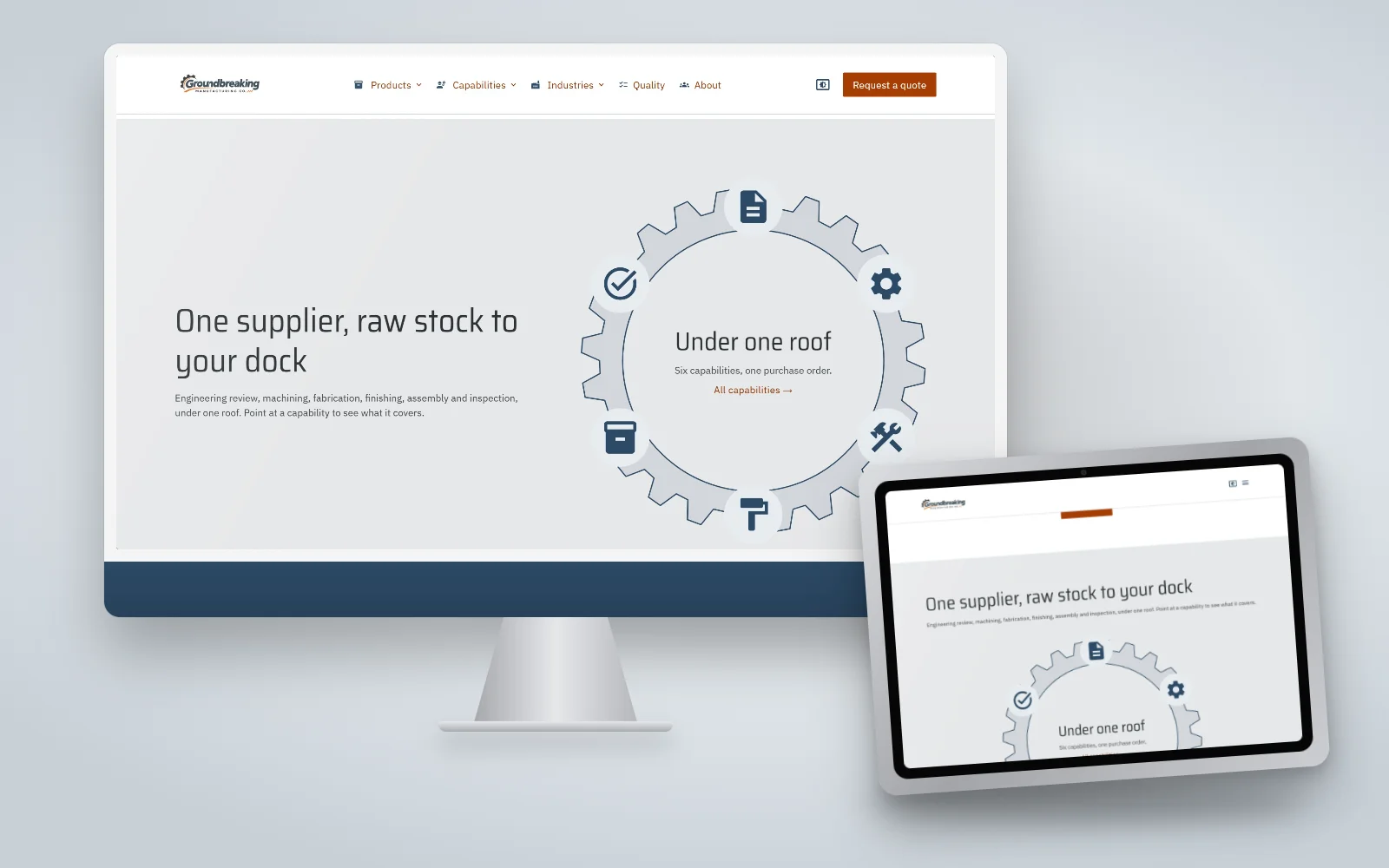
A fictional manufacturer: "CNC machining, sheet metal, finishing and assembly, built to print." In the picture: the homepage, its interactive diagram of one supplier from raw stock to a finished, inspected part. Also worth a look: the request-for-quote form, the product catalog, capabilities and quality pages, and the industries it serves. Engineers and buyers read specs and send RFQs during the workday in an office, so light mode is what they mostly see.
The one that serves customers like yours. The ten fall into three groups, and every industry has its own page on what we build for it.
Plain fees and disclosures, privacy written for people and a clear next step. These four handle money, health, donations and homes.
Capabilities, quality, projects and cost, answered before anyone calls. Buyers here decide over weeks or months.
A menu, a schedule or a booking the team keeps current itself. Articles bring in the people planning ahead.
No. They are invented so we can show real work without putting any client's private business on display. The products, prices, people and reviews are made up; the editor, the search and AI markup, the security and the speed are exactly what a client site gets. The forms work too: they come to Loam, so ask us anything.
No. Each one was designed and built from scratch for its industry, with its own layout, brand, pages and features: the bakery takes orders, the medical practice books appointments, the bookstore runs events. Yours would be designed the same way, around your business, not copied from one of these.
Start with the pages that do the selling, then open "Why this website?" and "How this site works" on any of them. Those two pages point out the search markup, the security and the editor on the page itself.
Every Loam site follows the visitor's own device setting, and the whole design is built to hold up in both. The slider shows the same page each way.
Yes. They send to Loam rather than to a business that does not exist, so a question sent from any of them reaches a real person here.
Plain fees and disclosures, privacy written for people, and a clear next step. These four handle money, health, donations and homes, so every page earns trust before anyone calls.
By answering the research questions early: capabilities, quality, projects and cost. Buyers here decide over weeks or months, and the site does the explaining while they do.
A menu, a schedule or a booking that the team keeps current itself, and articles that bring in the people planning ahead.
Yes. Yours would be designed around your brand, built the same way and filled with your real content. Tell us about your business and we will reply.
Loam built ten example websites for fictional businesses. Here is how those sites compare with Wix, Squarespace, WordPress, Webflow, AI-built and custom-coded sites.
Read moreEvery Loam example site has an annotated tour of itself. Here is what it shows: the headline, the invisible search and AI markup, the security and the build.
Read moreA blog is how a business answers its customers' questions before they ask. Here is what that looks like for a bakery, a dojo, a medical practice and seven more.
Read moreYours would be designed around your brand and filled with your real content, with none of the fiction.